During my first dozen-or-so hours with Grand Theft Auto 6, I fixed my leaky roof, collected some rum from a shady liquor store, played way too many games of pool, read a book about World War 2 soldiers with a penchant for teabagging, and caught a lot of fish. On the more ridiculous end of the spectrum, I also temporarily… borrowed a luxury yacht called Party on the Poop Deck before running it aground and drinking its owner’s beer, slapped the crap out of a bloke who cursed at me, found a finger in my horniest neighbour’s plumbing, threatened an alligator wearing a hat, and got mugged by a drunk sea captain with a harpoon gun – before stealing his weapon while he peed in a garden.
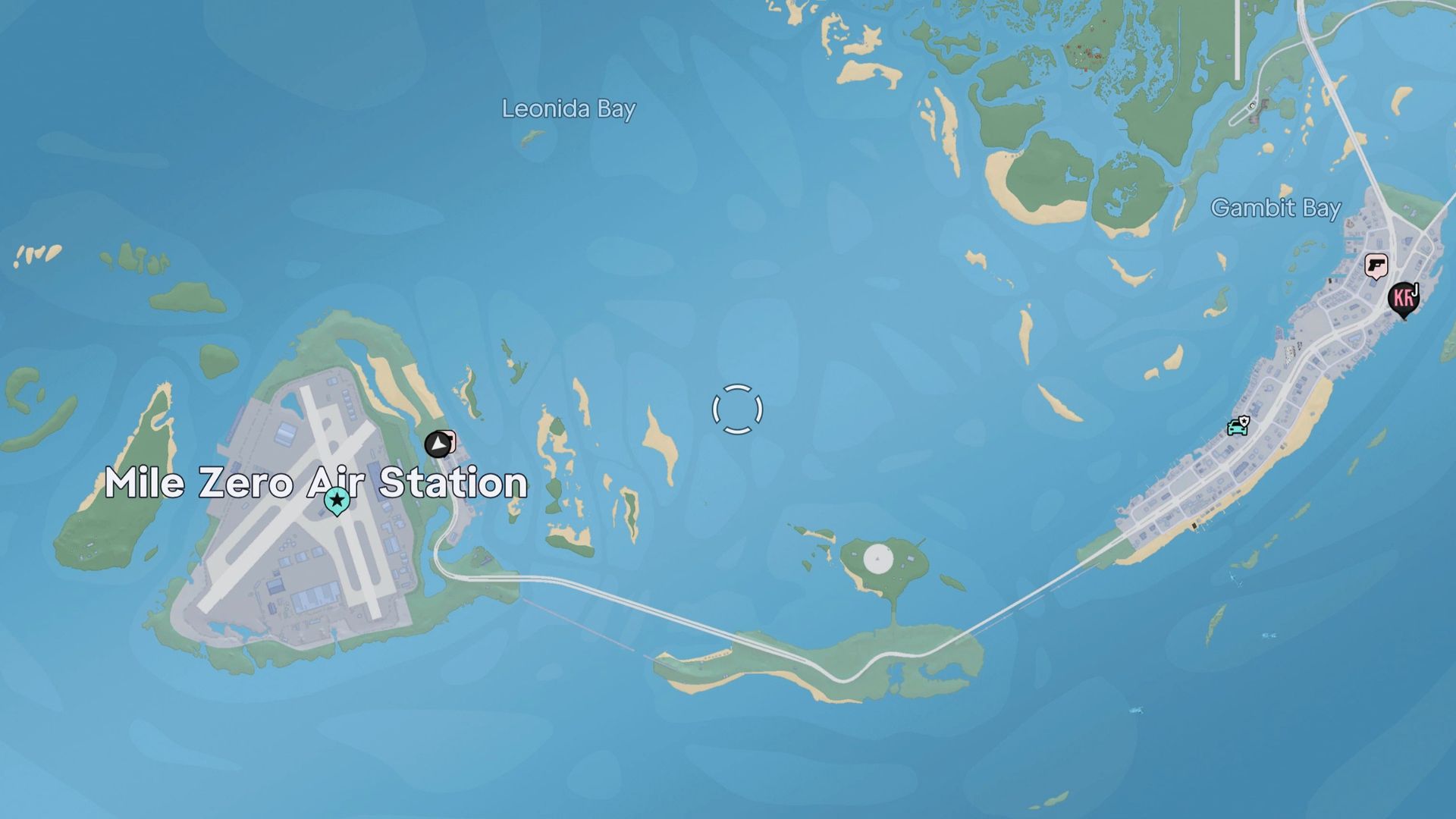
Over 100 hours later, I’ve now completely lost track of all the things I’ve seen and done within GTA 6’s astounding open world – and I see no real limit to the amount of time I could spend here, endlessly exploring and interacting with Vice City and the massive area surrounding it. While the well-paced story effectively nudged me around the map, there are still vast sections of it that I’m yet to even visit – despite hitting the credits after almost 120 hours of hijinks. Frankly, I’ve never played anything that’s hit quite like GTA 6 – and right now I have zero plans to stop playing it.
Jason Duval and Lucia Caminos are an interesting pair of playable characters, and unlike any leads that have come before them in the series. Their motivations and goals are very different from the main characters of previous GTA games, and their priority is really about escape rather than revenge or empire building. They’re not angels, and it is invariably their recklessness as small-time crooks that puts them in the wrong place at the wrong time, but the overall sliminess of their far more powerful antagonists does make the couple easy to root for throughout their story – which unfolds like four or five seasons of a prestige TV show.
My Jason and Lucia maintained a professional criminal rating throughout thanks to my style of play, where I opt for clean escapes, stealth, and non-lethal takedowns against general law enforcement if feasible, disabling vehicles by popping tyres rather than pummelling the windscreens with gunfire, and leaving civilians unharmed as often as possible. By the end of the story, I had actually only killed 11 civilians, all of which would’ve been unfortunate accidents.
Jason, a capable yet calm and softly spoken army veteran, is a natural fit for GTA. He remains mostly a mystery throughout, but his quiet cowboy demeanour doesn’t stray too far from Red Dead Redemption 2’s Arthur Morgan, and I like that. Lucia, who’s headstrong but not abrasive and confident but not cocky, gets to showcase a wider range of emotions. She’s easily the most likeable and multifaceted woman in the history of the series, and it’s abundantly clear that GTA’s writing has grown up dramatically in the last 13 years – and that RDR2 has had nothing but positive effects on its sister series.
We play mostly as Jason for the opening phase of Chapter 1, but it’s a smart way of easing us into the many systems we need to come to grips with (there’s a full help menu to explain any controls or actions you might forget). In the time it takes to start and finish many typical shooters and action games, I’d lived several days of a second life as Jason, who spends a good deal of his time on the wrong side of the law couriering drug shipments up and down the Leonida Keys but otherwise keeps a low profile in the relatively quiet tourist town he calls home. There’d been strife and there’d been shootouts, sure, but the main thread of the story had barely begun: Lucia was yet to re-enter the picture, I’d not even visited Vice City itself at all, and I was entirely content to while away hours messing around with GTA 6’s many, many distractions.
It’s ironic, perhaps, that some of its greatest distractions are actually games themselves – Jason has a PlayStation-style console in his home featuring three playable games, and his local bar has a darkly humorous riff on classic Buck Hunter cabinets I kept getting sucked into. Straight away, it’s evident this is not a world of painted-on backdrops and empty props. This is a world that feels more lived-in and real than anything I’ve ever played, and it’s one you can interact with at a level never seen before in the series. Yes, it was a long wait, but believe me when I say Rockstar has truly pushed the boat out (which, handily enough, is also something you can do yourself in GTA 6 if you find yourself beached).
Life in Stereo
I’ll readily admit I’m an easy mark for a game like this. I love action movies, car chases, and dad rock, and GTA 6 holds precisely the same things near and dear. I won’t list the long catalogue of movie references I’ve spotted since it’s way more satisfying to recognise them yourself. I also won’t spoil any of the specific needle drops Rockstar finds itself indulging in more than ever – one of which has become one of my favourite moments in the entire series. It does take over the dial a bit more than usual for key moments, but it’s always to great effect, and it certainly hasn’t come at the cost of any reduced focus on radio stations. The mammoth tracklist otherwise includes the return of classic stations V-Rock, Emotion, and Vice City FM, all of which are absolutely overflowing with solid gold (as is new metal station The Chamber). Just those four stations alone – which account for the lion’s share of my listening – feature nearly 200 songs between them.
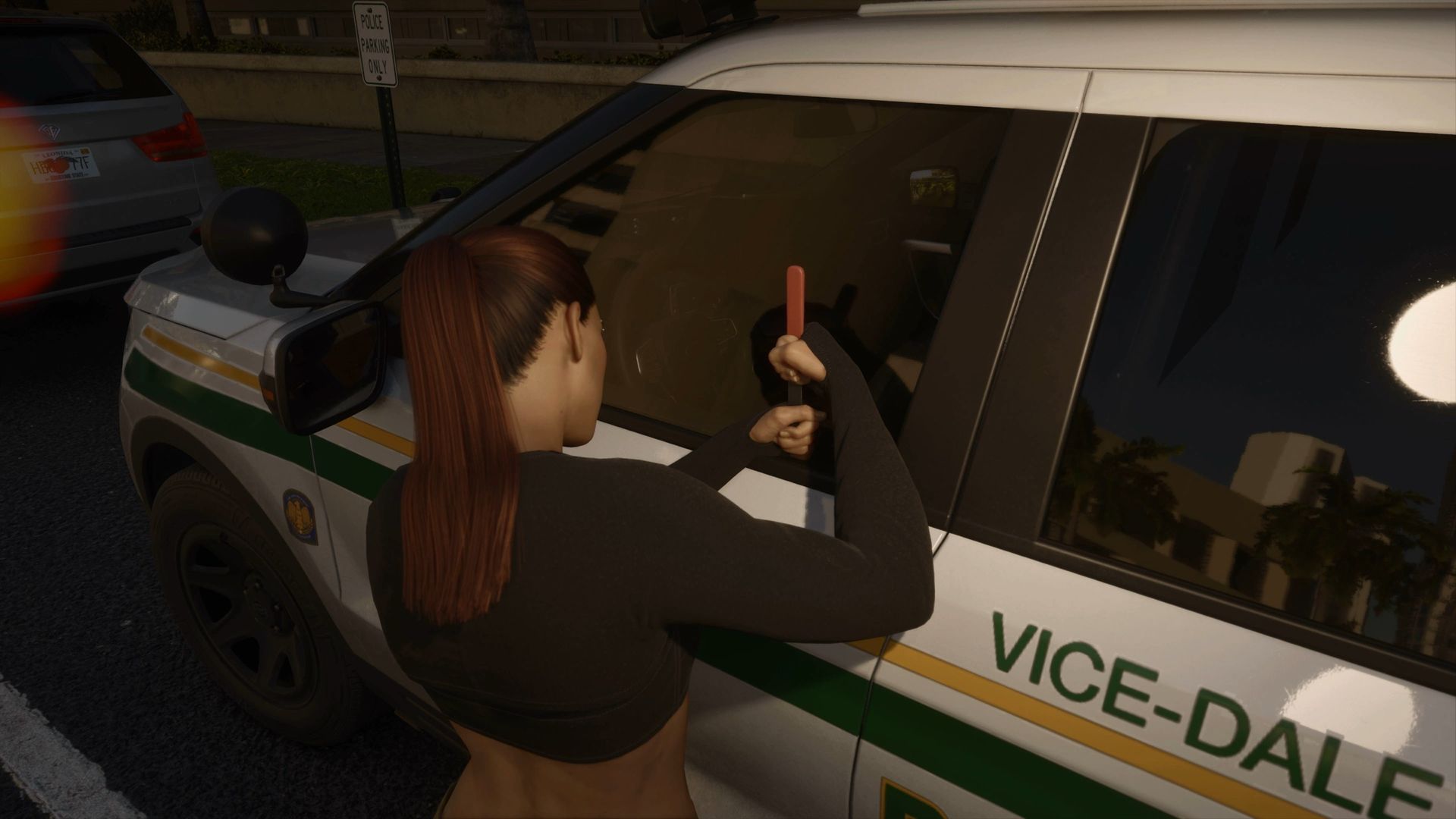
In a considerable blow for any company trying to sell me a next-generation console in the near future, GTA 6 also looks even better than it sounds. Allow me to freely concede I’ve never been fussy about frame rates, so long as they don’t constantly fluctuate. For all the hand-wringing I’ve observed over the fact that GTA 6 is locked to 30 frames-per-second – just as Rockstar’s most recent cowboy masterpiece was, not for nothing – I simply did not care in the slightest while I was actually playing. What matters to me is that it looks absolutely incredible and runs smoothly and reliably on a standard PS5. I find all the brilliant visual flourishes far more important, from the concentric rings of ripples on water due to helicopter rotor downwash, to the almost imperceptible line of sweat that appears on Lucia’s forehead after a brisk jog, or the buckling of the fabric on a shirt as torsos twist, to the temporary dents on a punching bag as you strike it. It’s the way long hair rises, whips, and falls over a character’s shoulders and back, whether that’s Lucia’s ponytail swinging back and forth – or my Jason’s luxurious mullet hanging in the air over a motorcycle jump during its brief moment of zero gravity.
This level of detail is seen in other animations, too – dynamic fights which never appear to play out the same way, and the bespoke solutions for characters to slink along the side of a vehicle if the door can’t fully open. Like, there aren’t just animations for operating longarm weapons one-handed if your other hand is full; there’s a separate animation for opening drink cans with one hand as well.
If a sufficiently stable and properly paced 30fps is the route to GTA 6 looking and functioning the way it does, bug-free, then I have no complaints. The sheer density of traffic and pedestrians is stunning, and the graphics at night are supernaturally good. Rockstar allows the world to be realistically dark, giving the lighting room to really flex. It’s honestly jaw-dropping, whether that’s at street level with car headlights and taillights piercing the dark, down on the beach during a late evening storm, or from high above where every light source in the city seems to be individually visible from a distance. Just imagine Microsoft Flight Simulator, only after you land, you can leave the airport, hit a drive-thru, and grab a burger.
The Real Thing
The feeling of authenticity is ever-present, and it extends across every element of what you see on screen. For instance, it’s not just that cars look incredible, or that they have animated drivetrains – which is something you don’t get in even the very best racing games. It’s that they’re not just cars – they’re all someone’s car. Maybe the bumper stickers have a story to tell, or there’s bespoke clutter in the tray or trunk. Maybe they belong to a specific business on the map; I’m still seeing vans driving around town with graphics and logos I haven’t noticed before. Maybe they’ve lived a hard life outside in the harsh Leonida sun, the clear coat has flaked away, and they now carry a patina of road grime and dust. Maybe the interior surfaces and seats are worn, maybe they’ve been poorly maintained and belch black exhaust smoke, or maybe they’ve been carefully customised with dazzling neons and truck nuts.
This attention to detail extends to boats, too. Not only have most of them been christened with unique names, but they too are filled with various personal belongings and custom fit-outs. And yes, they can be launched from trailers, put back on trailers, and towed to another boat ramp on the other side of the map if you wish. I adore this, and I suspect those who really want to roleplay in this world will too.
At any rate, GTA 6’s dedication to its in-universe car culture is honestly ludicrous, and I love it. There are tuning shops, car salerooms, and motorsport venues all over the map. The fully modelled engines can be restored and switched out. Exhaust and supercharger mods have noticeable effects on a car’s sound. Hell, there’s even a difference in the texture of a hasty Pay ’n’ Spray rush job, which always results in a visible orange peel effect, and a professional respray at a dedicated customisation shop.
The improvements to car damage are massive as well, with GTA 6 more closely resembling something like a slightly scaled-back Wreckfest rather than GTA 5. Lights and mirrors fall off, panels bend and buckle dramatically, and entire wheels can be ripped off before your car becomes fully disabled. Belt an assailant’s head against a nearby car, and it’ll even crater realistically where they bounced off the metal.
Car handling is also the strongest it’s ever been in the series, and it feels a lot more like a refined version of GTA 4 than GTA 5, which is actually great news. It brings back a very tangible sense of heft, only without the overly exaggerated suspension wallow. You can really slide cars properly here, and throwing them into 90-degree corners and perching them on the throttle is now total Hollywood highlight reel stuff. The only thing that really gave me pause was the motorcycle handling, which is quite upright and stiff compared to previous GTAs – I don’t hate it, but it does feel like it comes from a different game altogether.
The decision to opt for more realistic street widths makes for a way more authentic and engaging driving experience, whether you’re cutting up cars on the freeway or cruising the busy beachside strip. GTA 6 is not afraid to trap you behind traffic or roadworks and force you into quick decisions. Do you take the footpath? Do you push through and risk damage? It’s always asking you to think and act, and creates a dynamic to keep you fully engaged.
After a certain point in the story, you’ll get full control to assign Jason and Lucia personal vehicles that actually speak to you, breaking from the preset personal vehicles Michael, Franklin, and Trevor had in GTA 5. For instance, my Jason’s main ride eventually became a fully-built, Marty McFly-style black truck that I sought out and customised specifically. I really appreciate being able to control this element, and you can eventually have a small fleet of personal vehicles at your disposal.
Better Dead and Red
Your car in GTA 6 is very much like your horse in RDR 2, in that it will keep a variety of things safe for you when you’re not carrying (or wearing) them – like stash bags full of stolen goods, longarms, and a handful of outfits. No, you’re no longer able to pull a bazooka out of your back pocket – which may well be a point of contention amongst longtime players who crave the chaotic energy of having a stocked weapon wheel at their constant disposal – but I honestly haven’t missed it. I actually really like the RDR 2 approach of needing to gear up thoughtfully and manually, and it’s neat to see longarms slung over Jason and Lucia’s shoulders or held in their off hand.
Knowing how influential the more measured and deliberate pace of RDR 2 was set to be on GTA 6, I figured I had an idea of how this would translate into Rockstar’s modern crime universe – but even still I was unprepared for how satisfying the shift in attitude would be. It shepherded me into a more lifelike cadence, where I would wake up and eat breakfast or brew a coffee to buff my health, stamina, and focus (which is GTA 6’s consumable slow-motion power-up that functions similarly to Red Dead’s Dead Eye system). Following that, I may take on a story mission before spending the remainder of the day trying out a new fishing spot, playing pool at the bar, or simply exploring the area looking for cool vehicles, secrets, or interesting strangers.
It all very much feels like RDR 2 as well. Similar to Arthur, Jason and Lucia feel a little heavier than the GTA 5 trio in a pleasing way that grounds them more in the world and gives them a more convincing sensation of inertia as they otherwise seamlessly transition from one action to another. Opponents go down in ever-changing ways, depending on whether you’ve shot to kill or wound – and what you’ve shot them with. Heavy weapons will remove limbs entirely, so keep that in mind if you’re trying to be merciful. Hell, you can even pick up hats and sunglasses from your vanquished foes.
However, while RDR 2’s intimate, smoke-filled shootouts remain some of the best in the business, GTA 6’s firefights are typically orders of magnitude more spectacular thanks to the vastly increased amount of lead you can sling downrange. Gunning helicopters out of the sky is perhaps the most potent example, as sparks shower from the rotors, the mechanics fail, and they spiral down and either break into bits or disappear into enormous fireballs. Helicopters are actually more fragile than ever, and they’re especially susceptible to damage to their tail rotors, but I do love how much more realistic the crashes have subsequently become.
That said, there is a newfound focus on gently encouraging a slightly more empathetic approach when you deal with Leonida’s colourful locals – although, rest assured, the freedom to lash out like a heinous psychopath still exists. If you want to land a jumbo jet on the beach, you still can; you’ll just have to realistically find your way into the cockpit instead of teleporting in from the nose gear. From what I’ve gleaned, it might make sense to have a separate save file for these sorts of shenanigans if you want the story to culminate in a specific way (yes, there are multiple endings). In slightly disappointing news, it doesn’t appear there’s a way to replay previously completed missions from the mission list, which is an unexpected step back from the philosophy embraced by GTA 4: The Ballad of Gay Tony and GTA 5. There is an exhaustive list of cheats that are unveiled after completing the story, which is excellent to see since fun and hilarious cheats are a core part of GTA’s DNA. At least for now, however, the completed missions database is just a series of static thumbs.
Heist to See You
The broad love for GTA 4’s Three Leaf Clover bank heist mission is typically regarded as an important trigger for GTA 5’s heavy focus on major heists, and that philosophy has been wonderfully continued in GTA 6. Several massive heists – each with prep work, moving parts, complementary roles for Jason and Lucia, and dramatic crescendos – are all excellent. They unfold within varied and impeccably detailed locations, they benefit greatly from the vastly improved shooting and driving, and they are rewardingly spaced out across the second half of the story. However, what’s particularly interesting is GTA 6’s own brand of Three Leaf Clover’s classic cops ’n’ robbers fantasy, where tense bank robberies aren’t just isolated to scripted missions you can only execute once per playthrough – they’re now something you can pull off in the open world, at will.
Now, you can’t just successfully roll over banks immediately; you need to graduate up to them later in the story once you have the equipment to deal with dye packs. Hit a target with marked bills (or yank an ATM from a wall with a winch) before you have the necessary gear and your take will be lost in an exploding bloom of pink soot that totally coats Jason and/or Lucia and will persistently smear the inside of any vehicle cabin. It’s actually a brilliant visual effect for something I anticipate we’ll all overtly avoid doing more than once.
However, once banks do become viable targets, all bets are off. Essentially speaking, it’s Three Leaf Clover whenever you want. No more walking past locked bank branches that can only be engaged with in one-off story missions; now banks are realistic locations that can be entered and cleaned out. That’s a genuinely powerful shift in the long-established GTA crime fantasy. There’s more to it than checking a box and adding another law you can break; it’s about making this living, breathing world around you make more sense than ever. As much as I adore GTA 5, it is invariably discordant that you can bust into a military base and steal a tank, but you can’t push open a door and rob a bank. In GTA 6, that hard-to-swallow imbalance is gone. You can simply do both.
Bank jobs in the open world can unfold in multiple ways. Maybe you successfully sneak in the back, find the safe code, get distracted by an office cat, and get sprung by the staff. Maybe you tail an armoured truck pulling up, meaning the vault will be open – making for a bigger payday, plus access to safe deposit boxes. Maybe you stumble in with zero plan, stick around way too long, and completely botch your getaway. Robbing a bank solo typically works out differently from robbing it with your CPU-controlled partner by your side; for instance, head in alone and security might be a little less inclined to outright surrender.
What I find particularly satisfying, however, is how smart you can indeed play it with a little planning. For instance, I’ve been finding banks within a few blocks of multi-storey parking lots great targets to focus on. I park Jason or Lucia’s personal car a few levels up, steal a random getaway ride, and head to the bank. After taking it down, I head straight back to the parking lot as the cops mount their response. After speeding a few floors up, stashing the cash, and changing outfits (you can store a selection of spare clothes in your cars), I can gently cruise past the cops blocking the exit and make a completely clean exfil.
I’m absolutely loving the new, nuanced Wanted system, where the cops can only act on the information they have. I think it’s actually going to be a little frustrating to go back to the likes of GTA 5, where the police magically make a beeline towards you when your crimes cross a certain threshold – even if there are no witnesses, or any believable way for them to know which car you’re driving or what you look like.
There is no longer a radar showing the location of approaching cops, and I haven’t missed it once. Not knowing where the police could be turns evasion into a whole new and more organic experience, where the focus is on scanning the actual world in front of you for threats rather than spending most of your time looking at the minimap. That is, you’re no longer just trying to choose the right streets to leave a hot zone, like Pac-Man trying to route away from the nearest ghosts. You’re listening to the scanner for hints about what the cops know. You’re eyeballing the traffic in the distance, trying to figure out if any of them are police cruisers. It’s knowing when and where to stay out of view entirely, and when it’s safe for you to hide in plain sight. That’s a far bigger thrill.
About the Author