Reviewed on:
PC
Platform:
PlayStation 5, Xbox Series X/S, Switch 2, PC
Publisher:
Capcom
Developer:
Capcom
Rating:
Mature
Onimusha: Way of the Sword demands you learn its action as intimately as protagonist Miyamoto Musashi knows his sword. Anything less will leave you overly familiar with its “You have fallen” screen. Though Way of the Sword stumbles in some ways, perhaps taking too much from the series’ early 2000s past, like rift-spawned enemies in dull combat arenas, for example, the intricate and sweaty palm-inducing combat deftly puts the game, and thus your enjoyment, back on its feet.
Onimusha: Way of the Sword Video Review:
Similar to the real Musashi, who wandered around 17th-century Japan looking to slice another notch in his dueling record (history says he went undefeated with more than 60 wins), Way of the Sword’s younger, fictionalized version of the samurai does the same. Through a scene-setting opening sequence, he gains control of an Oni Gauntlet that imbues him with incredible strength, and he hates it – it’s unnatural, artificializing his campaign to be the best. Stuck in early Edo-period Kyoto, itself consumed by the malice of demonic Genma, Musashi gets to killing, and he does it really well.
Unlike most action games these days, Way of the Sword’s tutorials don’t end after 10 minutes. Musashi’s kit continues to grow hours into the game, and though this can create a dragging initial pace that leaves you wanting to rip its instructive shackles off, it’s for good measure. The setpiece boss fights feel like exams, skill checks that ask if you’ve been using everything you’ve learned, from parries to dodges to deflections and everything else Musashi is capable of; not just some of it. There is no button-mashing your way through Way of the Sword, and there is no cheesing its toughest fights either. Its most demanding moments require near-perfection, and each white-knuckle win arrives packed with cresting euphoria.
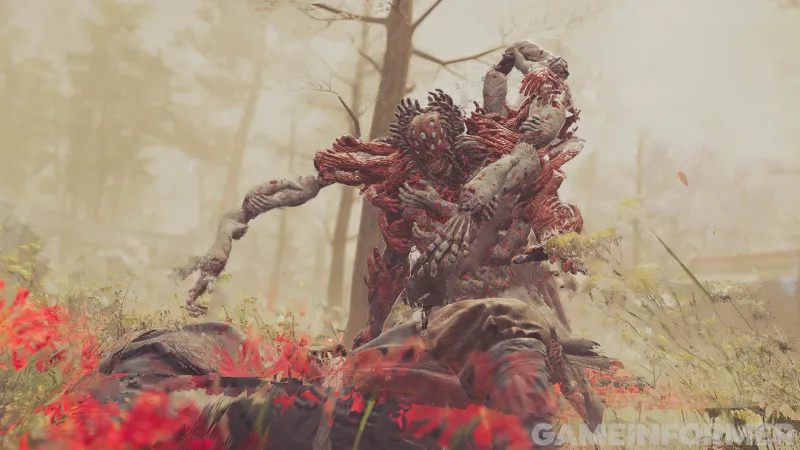
There is great fun to be had in even the most basic mob fights in eastern Kyoto and the surrounding postcard stages like the Arashiyama bamboo forest, castles, and more. Earlier stages are playgrounds for combative exploration, like Kiyomizu-dera or an underground lab hosted by Dokyo, the scene-stealing villain in Musashi’s rogue gallery. The environments drip with an earned smugness that feels like the developers saying, “We know it’s good, have at it.” Discovering new Genma, learning how they fight, and reacting to their attacks makes Way of the Sword hard to put down, but the latter half of the game is too reliant on the aforementioned rifts, which are essentially combat arenas you can’t leave until completing. They serve as quizzes before the incoming exam, but they occur so often (and commonly reuse bosses) that they become exhausting.
The teacher doling out these quizzes – Capcom – struggles to justify the repetition, too, with no discernible reason beyond those darned demons doing silly little demon things. It leaves Musashi’s journey feeling padded, especially when the named villains have tantalizing ambitions, and it’s clear there’s a better, more streamlined adventure somewhere in it.

There are plenty of opportunities to study, as it were, with simple side quests and folktale-driven “curious cases” to complete that give ample reason to return to completed stages, and a fun otherworldly arena for practice and boss rematches further yields opportunities to train. But there’s no way around it: you’re going to seal a lot of rifts and slash at a bunch of malice flowers to clear fog. Trust that you’re going to wish you could do this less.
Way of the Sword’s story matches its predecessors, rarely veering from the series’ formula. Demons are bad, you are good, and so you must stop them. Its characters, however, elevate an otherwise standard A-to-B-to-C plot progression. Evil scientist Dokyo’s taunting voice lights up every scene she’s in, and she’s as sinister as she is conniving; companion and kabuki creator Izumo no Okuni’s childlike steadfastness is the beating heart of Musashi’s more stoic crusade; and fellow Oni Gauntlet-wearing samurai rival Sasaki Ganryu is always an exciting (and flamboyant) surprise, despite knowing I’m always seconds away from one of the game’s most challenging bouts. It’s very clear these larger-than-life characters come from the same publisher-developer of Resident Evil, and they round out what is a refreshing samurai game that isn’t obsessed with honor or revenge.

Musashi’s mentor, Ono no Takamura, is an Oni sworn to protect the barrier between the Hell where the demonic Genma are contained and the living world in Way of the Sword. That barrier is under stress, and so begins Way of the Sword. Early on, Musashi asks Takamura why he willingly accepted the gauntlet and why he chooses to live as an Onimusha, constantly fighting the Genma. His answer? It’s fun. On the other side of this game, I agree.
Way of the Sword is far harder than any Onimusha before it, and it’s far more complex in its action, too. It’s the most satisfying and enjoyable Onimusha as a result. Though some of the more aging design elements do their best to slow Musashi down, he cannot be stopped, and ultimately, neither can the fun at the heart of Way of the Sword.
Score:
8
About Game Informer’s review system
feedzy_import_tag
About the Author