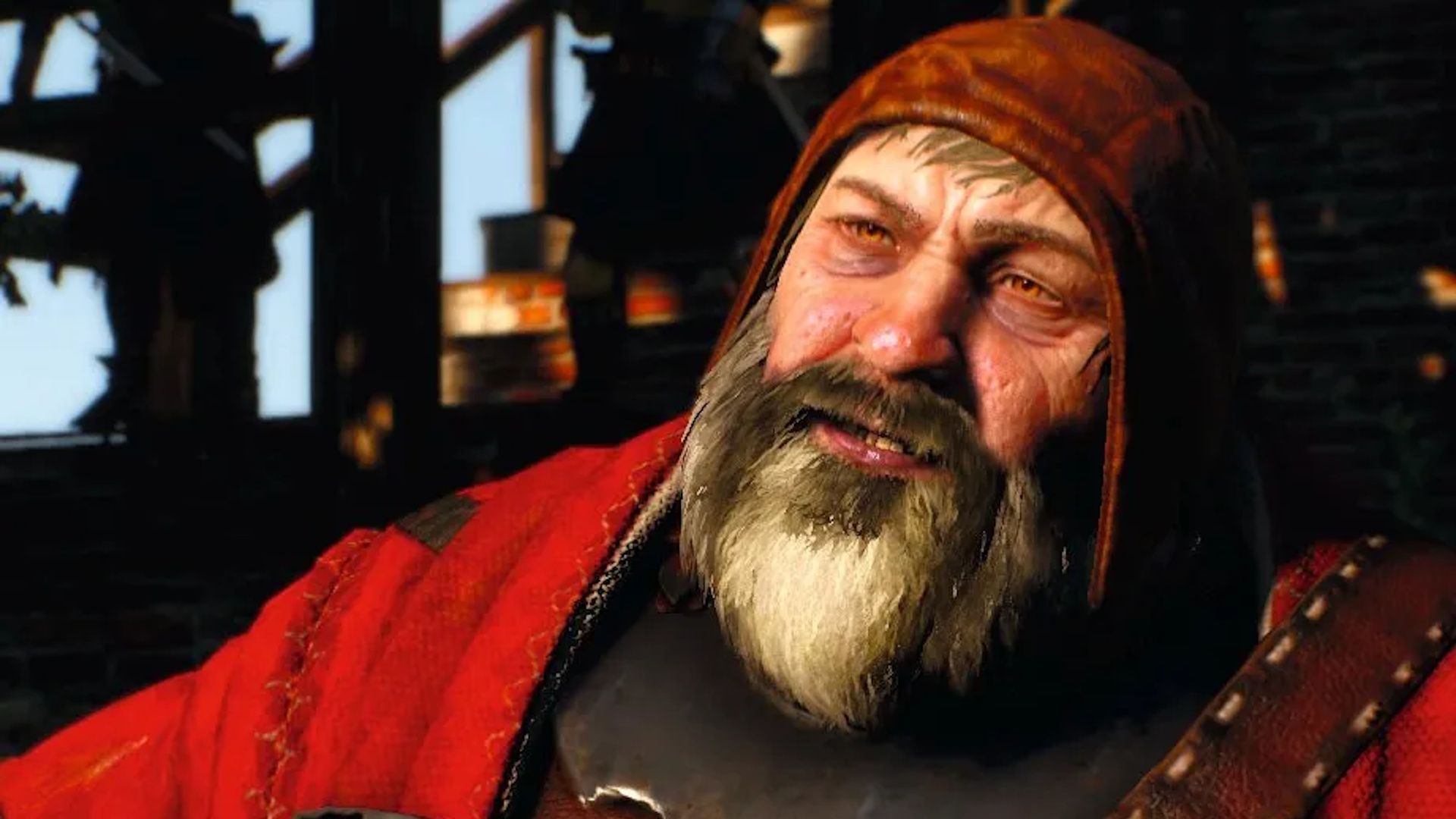
Mortal Shell 2 features most of the familiar hallmarks of the souls-like genre: It’s set in a dark fantasy world and incorporates gothic, medieval, and otherworldly themes into its aesthetic. Its combat is deep, challenging, satisfyingly hard-hitting, and will punish you for being overzealous. There are bonfires (called beacons) where you can rest and recover lost health at the expense of respawning enemies, and you also drop the level-up currency each time you die, forcing you to retrieve it in the next life or lose it completely.
On the surface, Mortal Shell 2 might sound like your standard run-of-the-mill souls-like–quite possibly too derivative for its own good–yet developer Cold Symmetry’s sequel is more than just a safe and simple copycat. It manages to stand out in an overcrowded genre by taking familiar aspects and transforming them in a multitude of meaningful ways.
As someone who quickly bounced off the first game, I came into Mortal Shell 2 with no expectations and was left constantly thrilled by its unique approach, which essentially deconstructs core elements of the souls-like experience to make them feel fresh and exciting.

The most immediately obvious of these is the absence of a stamina meter. You’re free to attack and dodge as many times as you want without needing to stop, catch your breath, and wait for a meter to replenish. This gives Mortal Shell 2’s combat an aggressive cadence, whether you’re on the attack or defending for your life. Rather than backing off after avoiding a flurry of enemy attacks, you can instantly launch into a barrage of offensive strikes yourself, or carve through weaker enemy mobs without gasping for air halfway through.
This doesn’t mean it’s a mindless hack-and-slasher either. You can’t cancel out of any attack animations, so each forward strike needs to be deliberate and considered to avoid overcommitting and leaving yourself wide open, especially when using slower weapons like the Great Martyr’s Blade or Obsidian Hammer.
The decision to forgo stamina makes a dynamic difference and is one of the most notable ways Mortal Shell 2 improves upon its predecessor’s combat–which was often marred by gratingly sluggish battles. It’s still not particularly fast-paced by any stretch, but the combat animations are much snappier without losing a sense of weight and visceral brutality.

The minutiae of stabbing, slicing, and bashing enemies to death with various melee weapons can best be described as “meaty,” creating a satisfying crunch as you cleave through flesh and lop off heads, limbs, and non-human body parts amidst a torrent of crimson rain. It’s great stuff, bolstered by a diverse variety of weapons and enemy types. From a large scythe and rangy spear to dual katanas that transform into an axe, each weapon type feels distinct, and there’s plenty of joy to be found alternating between light and heavy attacks to fluidly launch into different combos.
I only wish it were feasible to experiment with more weapons as your growing arsenal gradually expands. By the midway point in the game, I was drowning in upgrade materials but only ever had enough money to fully upgrade a single weapon. It would’ve been nice to use some of the others beyond just testing them out, but trading a weapon with multiple upgrades for one without any made no sense when I was never going to be able to improve it as much.
You’re also equipped with a sidearm, starting out with a short-range shotgun before moving on to more experimental armaments, such as a miniature Gatling gun and a lute that causes enemies to fight amongst themselves after a forceful strum. Each shot costs Resolve, which is replenished by connecting with melee attacks, so sidearms are an intrinsic part of combat, adding to its dynamism with another gratifying way to dismantle enemies.

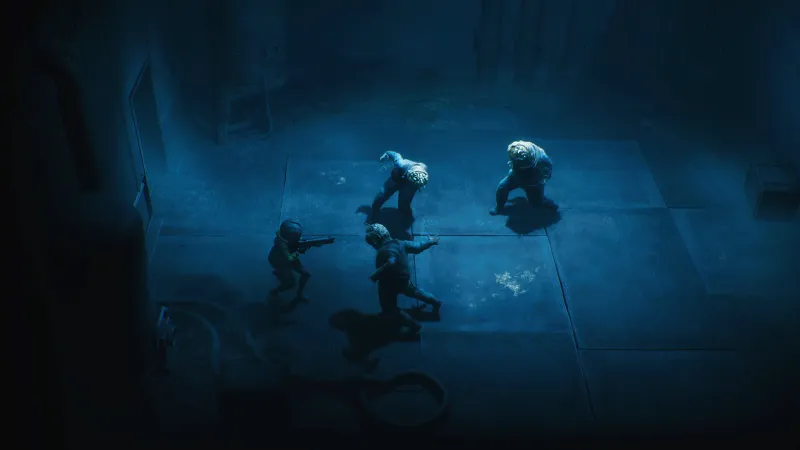
Meanwhile, the enemies you’ll face come in all shapes and sizes. There are armored knights–wielding either a sword or spear–fleet-footed assassins, religious fanatics, large bearded human skulls that scuttle around on four legs, insect-like creatures with deadly pincers, rock-throwing giants, and everything else in between.
This variety does plateau a tad during the game’s second half, as it introduces more variants of familiar enemies rather than entirely new ones, but there are so many different opponents to fight that repetition rarely rears its ugly head. They’re not just visually distinct, either. Each enemy type is meaningfully diverse in how they approach you, typically mixing things up with multiple attack patterns and feints to throw you off.
While you can always dodge incoming strikes, Mortal Shell 2 also gives you access to a few unique defensive maneuvers to suit different playstyles. The Harden mechanic from the first game returns–letting you calcify to absorb an enemy attack–only now it’s tied to a specific Seal. Seals are new items in Mortal Shell 2; you can only equip one at a time, and each one contains what would normally be a standard souls-like mechanic.

Blocking, for instance, is tied to a Seal that also lets you parry, dealing break damage to eventually make them vulnerable to a powerful riposte. Another Seal removes the ability to block but tightens the parry window, introducing greater risk for a greater reward by dishing out more break damage if your timing is perfect.
This opens up the game’s build variety, especially when combined with the titular Mortal Shells. Similar to the first game, you play as a faceless husk known as the Harbinger, a relatively weak entity that has the power to inhabit fallen warriors. There are eight Shells in total, and each one can be found at their character’s final resting place, whether that’s hunched over and impaled on a greatsword, hastily stuffed into a shallow grave, or displayed in a mausoleum beneath the Royal Keep.
Every Shell adheres to a rigid character archetype with predetermined stats that can be upgraded but not changed. This might sound restrictive, but it allows for tangible differences in how each Shell plays–especially when factoring in their unique abilities–with variety coming from your choice of weapons, Seals, and Tarstones.

I mostly played as Eredrim, a knight with the ability to lunge at enemies with a devastating shoulder bash that deals significant break damage. He also has a passive ability aptly named Executioner, allowing you to instantly execute enemies who are at low health. By performing ripostes, this ability also stacks, with each stack raising the low-health threshold at which enemies can be executed. If you like playing on the front foot, Eredrim is particularly satisfying to use, but the other Shells are no less interesting.
Tiel is a thief who can turn invisible for a short duration, lunging out of the shadows to strike with a dagger. While any Shell can equip the relevant Seal to parry attacks, Tiel excels as a nimble character, with perfectly timed dodges turning you invisible and dealing stagger damage to the enemy.
Sariel, on the other hand, fires parasitic thorns that hunt down nearby foes, nullifying their next melee attack while also inflicting Pain on Sariel himself. Pain affects your health bar, adding a grey portion that can be lost in a single hit or cured by dishing out melee damage. When Sariel has no Pain, a huge 50% of incoming damage becomes Pain. However, reaching the Pain limit lets you dodge faster, putting you in the role of a masochistic character who excels when it hurts the most.

Tarstones add another layer to the development of your build, unlocking everything from specific buffs to powerful special attacks. They can be found by exploring the world, completing dungeons, and defeating bosses, so once I had discovered enough, I eventually geared mine towards dishing out as much melee damage as humanly possible. With each Tarstone fully maxed out and upgraded, I increased my critical damage by 100%, raised my critical chance probability to 18%, and was guaranteed a critical hit every five attacks. It’s an incredibly flexible system, creating a greater discrepancy between the usual strength or dexterity options and ensuring that build variety remains at the forefront of the game’s ethos.
With so many tools at your disposal, Mortal Shell 2 still manages to strike a decent balance with regard to its difficulty. For the most part, it’s a challenging game, but one that hits the souls-like sweet spot where it rarely feels unfair. Deaths are typically your own fault, and there’s always room to improve, both as a player and by upgrading your character.
There are a couple of difficulty modifiers you can utilize as well, with a specific Seal making things easier at the cost of disabling Achievements, and another item that lets you increase the difficulty while also opening up a few areas that are otherwise locked. The fact that this isn’t just a binary difficulty choice fits the genre, though disabling Achievements feels egregious, even if most of its contemporaries refuse to offer an easier alternative.

The game’s default challenge comes saddled with a few caveats, too. While it mostly feels fair, falling to your death is too common for my tastes. The entire open-world map is suspended in the air, so there are numerous areas where you can slip off the map, particularly when a lot of attacks will knock you several feet backward. I can place some of the blame for this misfortune at my own feet, but there were still dozens of situations where toppling off the side of a cliff felt cheap and frustrating. Dying more to fall damage than the game’s own bosses is a travesty.
This is partly due to the game’s level design and partly because some of the bosses are overly simplistic in their attack patterns. It’s a problem that afflicts mini-bosses more frequently than the game’s headline foes, but it also doesn’t help that the basic parry window is exceedingly generous. When you’re fighting regular enemies, and typically dealing with more than one, this isn’t much of an issue. It’s just much more prominent when facing a mini-boss that’s too predictable to be compelling.
Aside from the abundance of dangerous ledges, Mortal Shell 2’s open world is a fascinating place to explore. It’s not as expansive as something like Elden Ring’s The Lands Between–you won’t find any vast open fields, for instance–but it’s densely packed. Each area feels like a dedicated level from a more linear game, except they’re all interconnected with more than one way in and out.

Its castles and murky swamps can feel a tad derivative, but there are typically more than a few visual flourishes that stand out in even the most familiar locales. There’s an abbey where the colors are muted to the point of looking almost monochrome, yet the red leaves wrapping around its cold, stone walls create this striking burst of color. Elsewhere, you’ll find unsettling human teeth carved into cave walls, monolithic structures that punctuate the horizon, and what was once a picturesque village now plagued by rabid cultists. Material rewards are available for those who deign to explore, but the sights themselves are often a reward of their own.
Mortal Shell 2 constantly surprised me, whether it was the mechanics behind a newly discovered Shell, the layered improvements to combat, a bulbous monstrosity of a boss fight that was more mouth than anything else, or the ways you can tinker with a build and make it wholly your own. It stumbles at times and could use some fine-tuning to really hone its balance issues, but even if it can be irritating or too simplistic at times, these moments are overshadowed by its unmistakable strengths.
feedzy_import_tag
About the Author