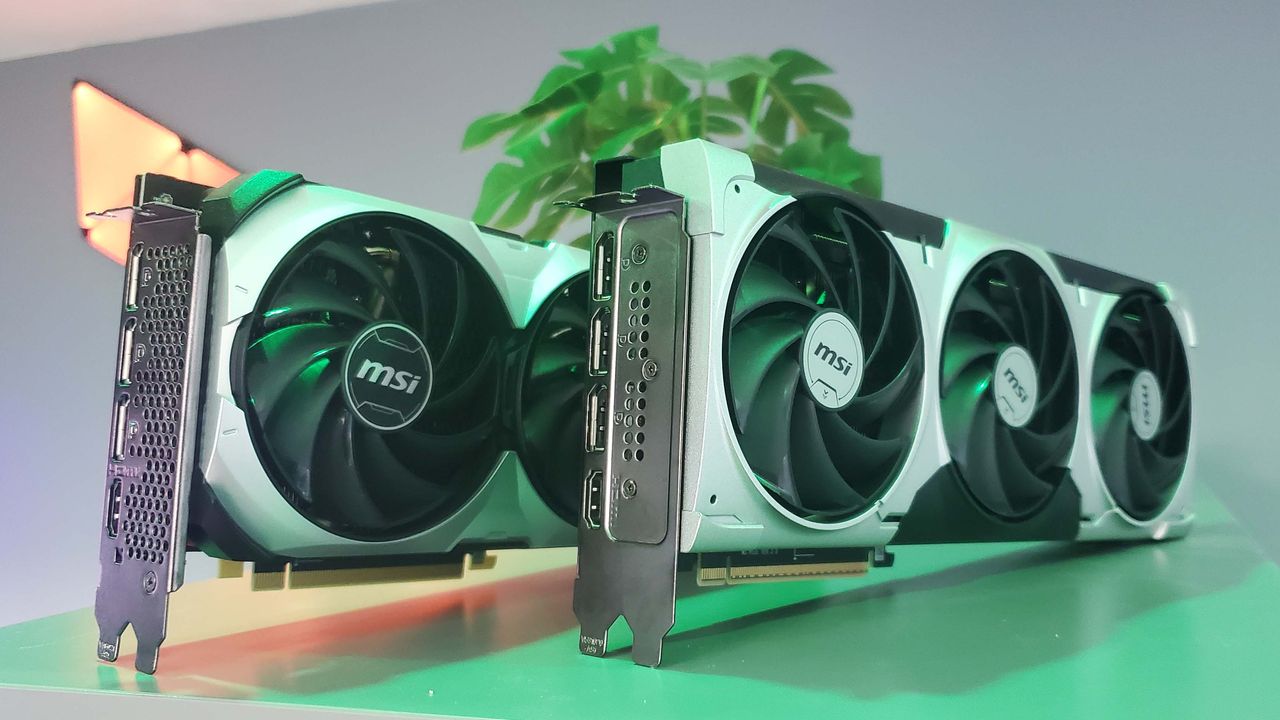
Graphics cards are one of the most powerful components in your gaming PC, and probably the most expensive piece, too. What you might not realise is just how many critical threads there are behind making them, but if you’re keen to know more, then one company has produced a visual guide to help you grasp the intricacies of it all.
Business data firm Veridion shared its creation via a post on Reddit, and while it shows the supply chains for making Nvidia’s H200 AI megachip, many of these sources are still relevant for the manufacturing of common or garden graphics cards.
For example, all GeForce RTX 50-series cards sport a GPU that’s been fabricated and packaged by TSMC, and the majority of them have GDDR7 VRAM made by Samsung, SK hynix, and Micron (the exception being the RTX 5050, which uses GDDR6, though that’s still made by the same companies).
However, it’s worth noting that this Sankey diagram is for just the H200 chip. A chart for an entire graphics card would have to include all the suppliers of the printed circuit boards, the electrical components that are mounted on the PCB (resistors, capacitors, video output sockets, etc), as well as everything required for the cooling system. In other words, a supply chain Sankey for, say, a GeForce RTX 5070 Ti would be even more complex.
Every step in the whole chain has a degree of vulnerability to it. If any one of them ran into problems meeting demands, it would potentially impact the output rate of the factory that puts it all together. You might think that the likes of Asus, MSI, or Gigabyte keep vast quantities of components in stock to prevent this from happening, but as I discovered when I visited MSI’s motherboard factory, it’s nowhere near as much as you might think.
That said, there’s not a major lack of graphics cards on shelves right now, so that aspect of the supply chain doesn’t appear to be a concern. However, one only needs to look at the current price tags of said cards to see that there’s another side to the threads in the supply chain web that’s of a far more pressing concern.
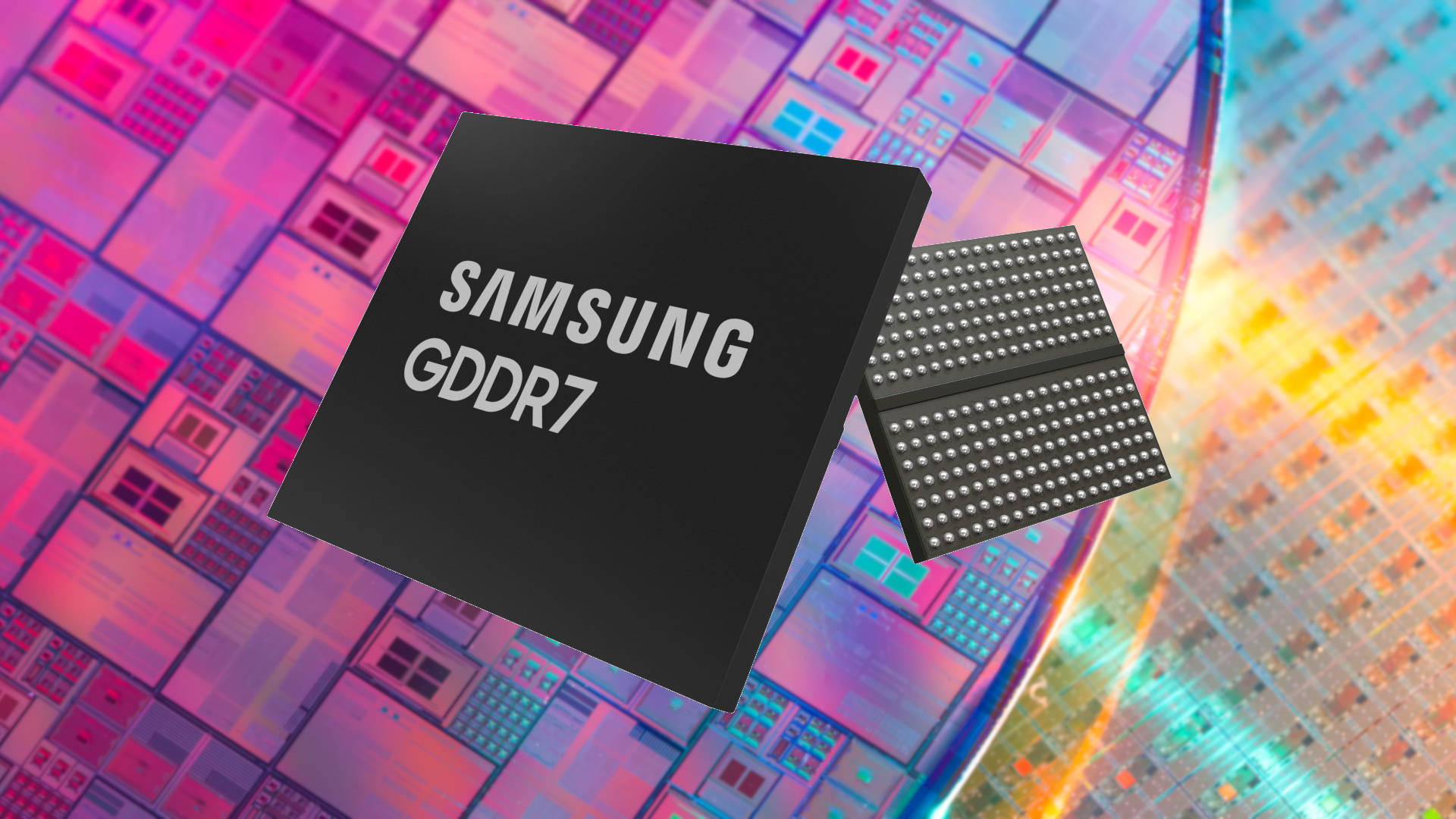
I am, of course, talking about what happens when any one supplier suddenly decides to ramp up its prices. We all know that the reason why graphics cards are so ridiculously expensive right now is down to Samsung, SK hynix, and Micron ramping up their GDDR7 price tags, but if key suppliers to TSMC did something similar, the situation would be even worse, as it would increase how much Nvidia has to pay to have its GPUs made.
No guesses as to who that price increase would be passed on to.
Such is the nature of the immense supply chain behind every complex piece of hardware in your gaming PC. When it’s all running smoothly and not being squeezed by forces outside of our control, we get affordable, nice goodies. But when a handful of people decide to throw billions of dollars at something that can’t spell basic words, it all goes wonky donkey, leaving the world of PC gaming in the lurch.
feedzy_import_tag feedzy_import_tag
About the Author