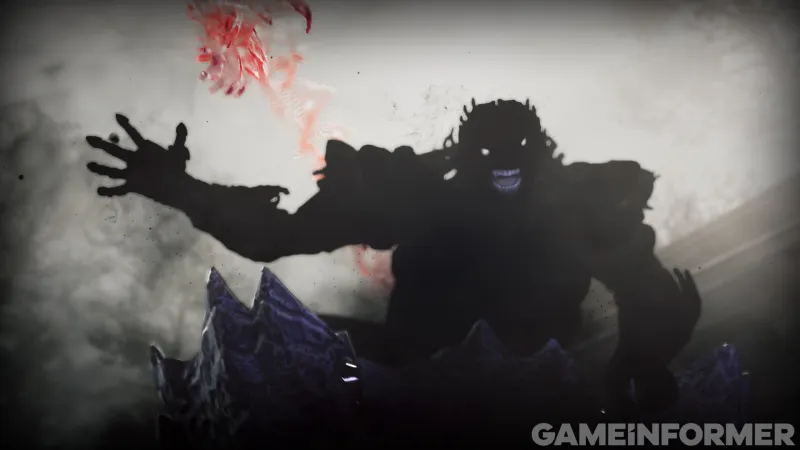
Capcom’s samurai action series, Onimusha, has been around for more than two decades… kinda. The first game, Onimusha: Warlords, arrived in 2001, and within the next five years, three more mainline games were released. The last one launched in 2006, and it’s been 20 years since without a sequel. Onimusha: Way of the Sword is set to change that when it launches next month, and ahead of that launch, it is the latest game to grace the cover of Game Informer (and subscribers can read the cover story right here).
I traveled to Osaka, Japan, to visit Capcom’s HQ, play never-before-seen parts of the game for hours, and interview the team making it. As a fan of the series, it’s clear to me that the “dark-fantasy” through line in the first four Onimusha games continues in Way of the Sword. That was particularly showcased in one section of the game I played through, which took protagonist Miyamoto Musashi into the underground lab of an evil Genma named Dokyo. There, the game’s dark-fantasy feel crossed over into full-on horror. Despite a couple of hours of gameplay that resembles a horror game, Capcom says Way of the Sword is not a horror game.
This Dokyo, highlighted in the Game Informer video above, is a particularly twisted Genma. She kidnaps people – including children – and experiments on them to create new Genma by fusing them with animals. In one scene, she hoists a man fused with a large pig into the air before disposing of him in bloody fashion. She can’t do this in the broad daylight of Way of the Sword’s early Edo-period Kyoto, so in typical Capcom fashion, the team created an underground lab befitting the demon.
“There was not really an intention to make a horror game […] but with trying to build the character of Dokyo, in particular, we wanted to really showcase her twisted nature and that unsettling side of her and combine it with the strange and eerie occult side of Kyoto myths,” lead writer Hiroshi Yamashita tells me, explaining why Dokyo’s lab feels like a horror level within an otherwise non-horror game. He adds that the scares of this lab – which, mind you, does feature jump scares that got me once or twice – are not indicative of the full game but rather just this specific stage built around Dokyo’s more gruesome nature.
Way of the Sword director Satoru Nihei describes this stage as one of the more horrific in the game’s dark-fantasy action experience, likening it to a “classic Japanese ghost house.” Somewhat familiar with this subgenre of Japanese horror, it’s clear in what ways: shadows on the lab’s shoji highlight horrific body mutations and animal experiments gone wrong, and the halls are dripping with blood that shimmers in the soft glow of nearby torches. Once-beautiful kimonos hang from the rafters above, and it’s evident they used to belong to the subjects screaming in agony throughout this stage. Even Dokyo herself is designed in a horror-infused way, with elongated appendages, a shrill and petulant personality, and the way she speaks as a mastermind of the maze that is her underground lab (which, during Way of the Sword, you are clearly trapped in).
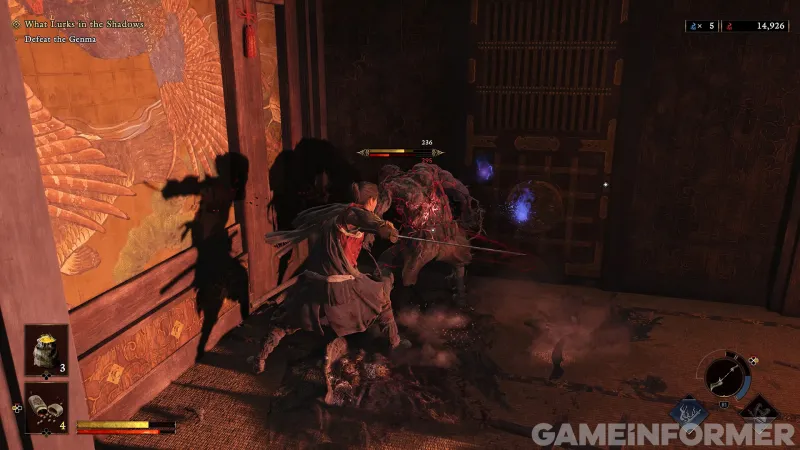
Nihei says this specific stage heightens the anxiety and tension Musashi and Shizuka, the mysterious and ethereal woman trapped in his Oni Guantlet, are feeling, which is why the team “thought this [horror-inspired stage] was a good way to explore those feelings and contrary states in the setting.” There’s also contrast in Dokyo herself, who is quite demonic and inhuman in appearance, but speaks in English/Japanese and dons a beautiful kimono as if she’s a woman.
I came away from my time playing Way of the Sword most enamored with Dokyo – she’s unsettling and twisted, but very compelling and absolutely a scene-stealer in the game. I look forward to seeing more of the horror her stage promises, as well as the other parts of the game where dark fantasy morphs into something closer to Capcom’s Resident Evil series. Fortunately, I don’t have to wait too long because Onimusha: Way of the Sword launches on September 4.
I’ll continue diving deeper into Capcom’s return to Onimusha as part of Game Informer’s month of Way of the Sword coverage. We’ll be publishing exclusive gameplay and behind-the-scenes videos (including a Rapid-Fire Interview) on the Game Informer YouTube channel as well. Keep an eye on the Onimusha: Way of the Sword coverage hub so you don’t miss any of it.
In the meantime, here’s some additional Onimusha: Way of the Sword reading for you:
- What We Learned About Shizuka, The Mysterious Woman Living In Musashi’s Oni Gauntlet In Onimusha: Way Of The Sword
- Onimusha: Way Of The Sword Isn’t An Open World Game, And It Isn’t A Soulslike Either
- Here’s What The Genma Are Up To This Time In Onimusha: Way Of The Sword
- Capcom Had To Ask RE Engine Engineers To Create The ‘Dynamic Dismemberment System’ For Onimusha: Way Of The Sword
- How Capcom Created Its Own Version Of Legendary Samurai Miyamoto Musashi In Onimusha: Way Of The Sword
- How Capcom Reinvented And Updated Onimusha’s Combat In Way Of The Sword
- Onimusha 2 Director Motohide Eshiro On Way Of The Sword’s Resurrection Of The Series
- A Look Back On The First Two Onimusha Games With Planner And Director Motohide Eshiro
- Here’s How The Late Japanese Actor Toshirō Mifune Became The Face Of Musashi In Onimusha: Way Of The Sword
- Capcom Says Onimusha: Way Of The Sword Success Being The ‘Pinnacle Of Swordplay Action Games’ Is What Success Looks Like After A 20-Year Gap
- There Are No Minigames In Onimusha: Way Of The Sword, But It Sounds Like The Phantom Realm Is Back
- Puzzle Boxes Are Gone In Onimusha: Way Of The Sword, But Bigger Environmental Puzzles Have Taken Their Place
- Onimusha: Way Of The Sword Isn’t Connected To Previous Games, But There Are Homages
- How Capcom Decided On Miyamoto Musashi For Its Onimusha: Way Of The Sword Protagonist
- Why Kyoto Was The Perfect Setting For Onimusha: Way Of The Sword
- Why 2026 Was The Year To Bring Onimusha Back After A 20-Year Gap
How do you feel about the horror elements of the Onimusha series? Let us know in the comments below!
feedzy_import_tag feedzy_import_tag
About the Author