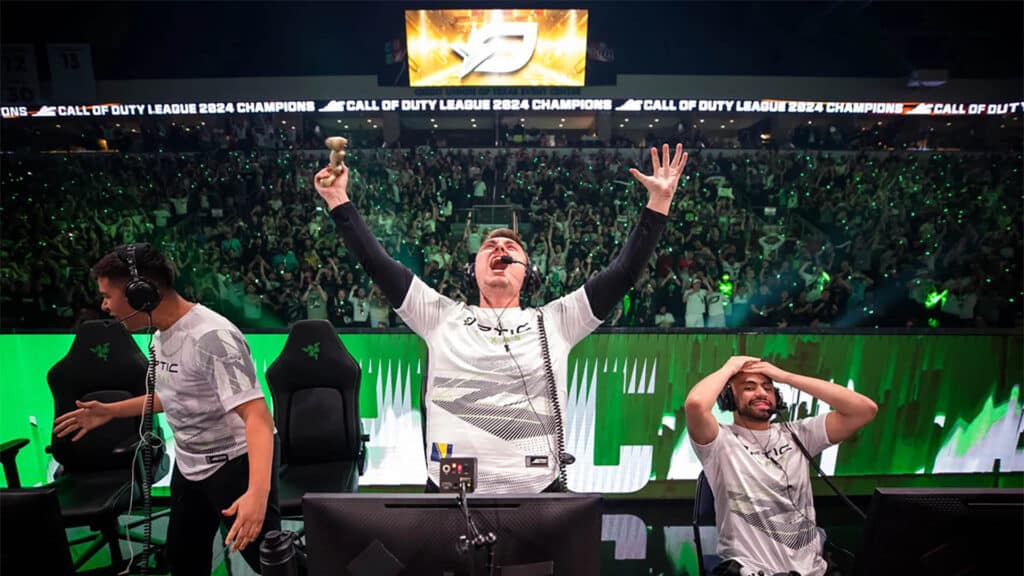
The Call of Duty League has never really reached the heights of other shooter esports like VALORANT and Counter-Strike 2. The highest viewership in 2026 thus far has been 353,000, set by the Stage 1 Major, which is nowhere near “dying” status but still far behind the competition.
There is a lot of speculation as to why Call of Duty can’t seem to reach the same viewership as other shooters. One issue is that it has the same structure and support as the Overwatch League, which notoriously failed due to many poor decisions by Activision. A few years ago, the CDL moved to YouTube exclusivity as part of a partnership.
Another big issue? The game itself is losing players. It currently has just 35,000 players online, according to SteamDB. The CoD fatigue is real. And with mixed feelings about Black Ops 7, gamers are turning to other FPS titles. This means losing interest in the esport as well.
Now, former Call of Duty Multiplayer Creative Director Greg Reisdorf has expressed his views on why the esports scene is failing.
Greg Reisdorf Identifies Why Call of Duty Esports Suffers, But Offers No Solution
There are too many Call of Duty games. A new one comes out every year, and it not only leads to rushed games and bored players but also hinders the growth of the esports scene.
Hellcase recently asked Reisdorf if the team ever considered a separate PvP version of the game that could remain consistent like Counter-Strike, keeping the esports scene away from the annual release schedule.
“It always came up in development: why are we doing this over and over again? It’s always a topic of conversation with the players and within the devs because you are redoing it over and over again,” he expressed.
Basically, esports pros and casual players alike don’t enjoy the idea of spending “hundreds and thousands of hours” trying to get good, only to have it “uprooted” again when the new game comes out.
“You’ve mastered those skills over your lifetime, and you’ve mastered the skills of using the controller and everything else, but not really the rules of the game, because the rules of the game are changing every year or even each season for that matter,” Reisdorf said.

At this point, there is no consistency for the players, the fans, or the league itself. Big changes and updates – like new characters – has always been a big disruptor for plenty of esports, which has led to burnout in the past. The rush to learn a new meta every few months, which sometimes even makes their go-to character no longer viable, has been a tricky issue in esports compared to traditional sports.
But Call of Duty takes this to the extreme. There’s a whole new game every season.
Reisdorf noted that it would be great to have a more consistent product for people to latch onto, especially the esports scene. It would create more longevity, similar to Counter-Strike, and create a much stronger and more dedicated competitive player base. With more established names in the scene, there would be more fans.
Said VALORANT content strategist Roxanne “Lux” on X: “People don’t get invested in sports performance alone. They get invested in STORIES and PEOPLE. Give something to root for.
“Until orgs start building narratives and funding the production, content, and marketing needed to reach new audiences, esports will stay trapped in its own loop, fighting over the same attention instead of growing beyond it.”
Unfortunately, Activision needs to make money. And that means a new game every year. Which also means broken narratives, retiring players, and tired fans. League of Legends, Dota 2, and Counter-Strike are well-established titles that have remained largely the same for years. Storylines grow, players rise up, talent is honed in, rivalries form, and fans are knowledgeable and invested. That’s something the Call of Duty League lacks.
Hellcase asked if Activision could possibly turn to skins and other cosmetics, like Counter-Strike. This way, they could make some money without having to create an entirely new game every year. Yes, Call of Duty League fans are so desperate for the league to feel more established and gain more fans that they are willing to buy skins. Just stop making more games, damn.
“Yeah, I mean, that’s a great model for the community as well, within the community marketplace in Steam, where people can go and trade those things. That’s entirely what I’ve built my new company off of: the mindset that you can build your community with them invested in it, where they can work within that and build careers around it, which is something you can’t really do inside the Steam marketplace because you can’t get that money out,” Reisdorf noted, mentioning Oncade.
However, with funding down throughout the industry, it may be difficult to rely on in-game purchases. I mean, when it costs $85 to fill up your commuter car, you might not have $10 leftover to spend on a random Call of Duty skin.
Instead, he wonders whether the Call of Duty League could better leverage its existing community, aiming to produce more genuine, passionate content. This includes fan-generated content and listening more closely to fan feedback to see what they actually want.
Maybe Call of Duty Is Meant For Casuals, Not Esports

It seems like the Call of Duty League may continue to be in a tough spot for now. How do you build up a fanbase and expand a community when the game changes every season?
Fans have some ideas. They want more tournaments in place of league matches, and they want league matches played on LAN rather than online. Some fans also want the league expanded to have more teams. But would this really get the Call of Duty League to grow? Would it reach new regions?
“CoD is not made for esports,” one fan suggested. “It’s a casual game that happens to have a competitive community within it. The big esports are all big because the games themselves are designed for esports.
The casual audience is the clear priority for Call of Duty, which explains the steady stream of new titles. Activision wants money from the casual players who buy the new title on Xbox every year. That’s where the money comes from. Not esports. Holding back from its insane release schedule for esports’ sake would make no sense.
Added another fan: ” The game changes every year, which doesn’t happen with any other esports title, it’s a full-priced, premium release, it’s played on controller, it has too much negative stigma around it… Do I need to go on?”
The post “If they stop doing yearly cycles and start thinking in terms of longevity, it could be interesting”: Former Call of Duty boss discusses esports limitations appeared first on Esports Insider.
feedzy_import_tag feedzy_import_tag
About the Author