What is it A free-to-play hero shooter with a funky raid mode.
Release date January 26, 2026
Expect to pay Free-to-play
Publisher Wildlight Interactive
Developer Wildlight Interactive
Reviewed on RTX 5090, Ryzen 7 9800X3D 4.7 GHz, 64GB RAM
Multiplayer Up to 10 players
Steam Deck Unsupported
Link Official site
I have found myself in the inconvenient position of being a Highguard moderate. I don’t love it, and it’s not what I’m looking for in an FPS these days, but I can’t deny it’s often fun.
Overcomplicated? Yes. Artistically tacky? You bet. But Highguard’s marquee Raid mode is genuinely unlike any other FPS mode out there, at least in the sense that nobody has ever constructed this particular FPS sandwich before: Two slices of Rainbow Six with a battle royale center. I also appreciate that it’s a free-to-play shooter that doesn’t bombard players with ads (at least for now) or sell battle passes that expire. It’s doing the regular live service things as right as you can without simply not doing them, which honestly, would be preferable.
Highguard’s bigger problems—at least, the ones it can still control—come from the consequences of its strange mixture. With huge maps occupied by six people, bases that you can only raid in small chunks, and a looting phase that’s almost entirely pointless, I wonder if developer Wildlight has overbaked the loaf. Highguard matches are too directed to surprise, too small to feel grand, and too sweaty for those other things not to matter. It takes the chaotic spirit of Rust or Minecraft Bed Wars and sands it down until it’s frictionless and bland.
Hot potato
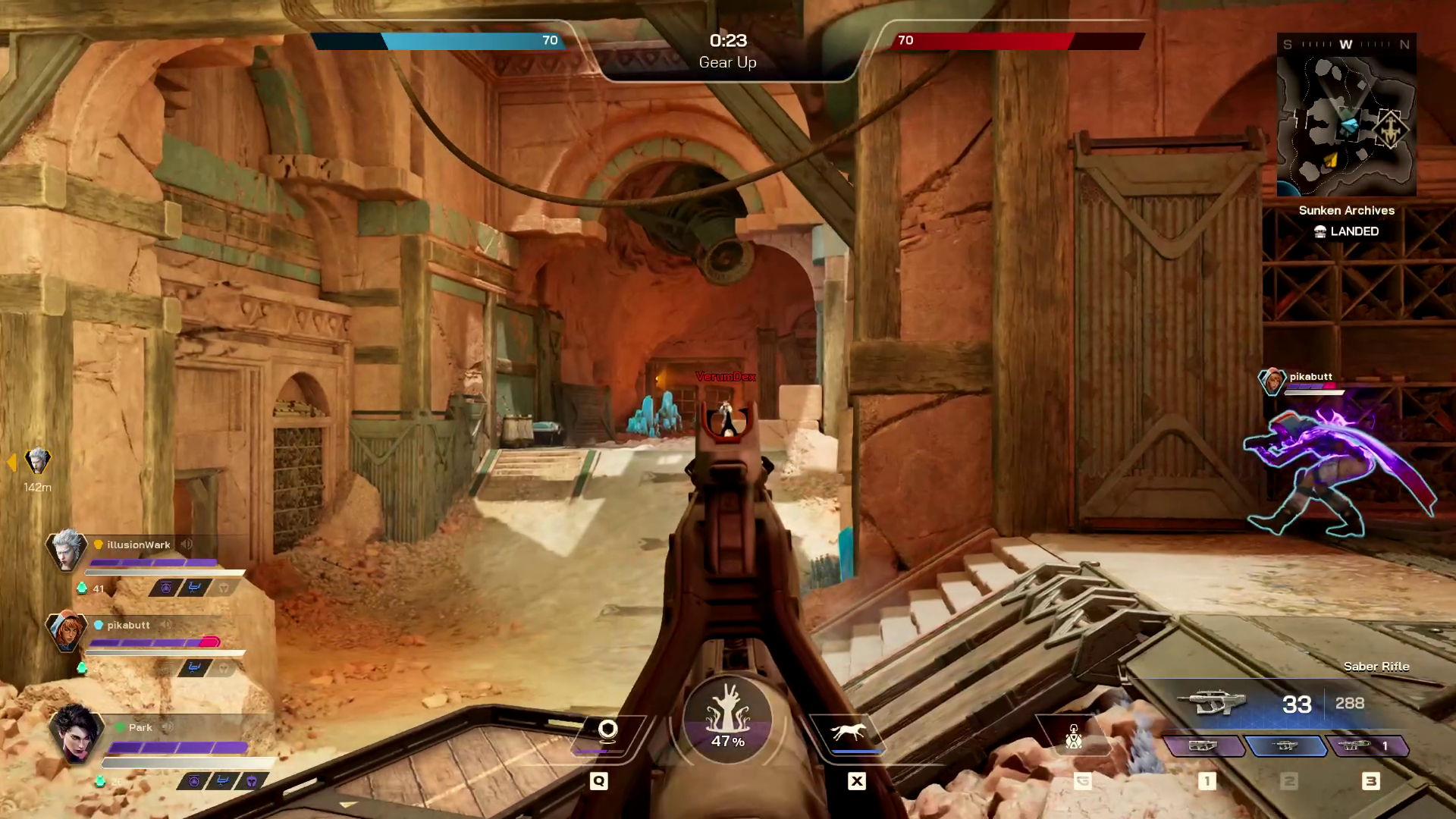
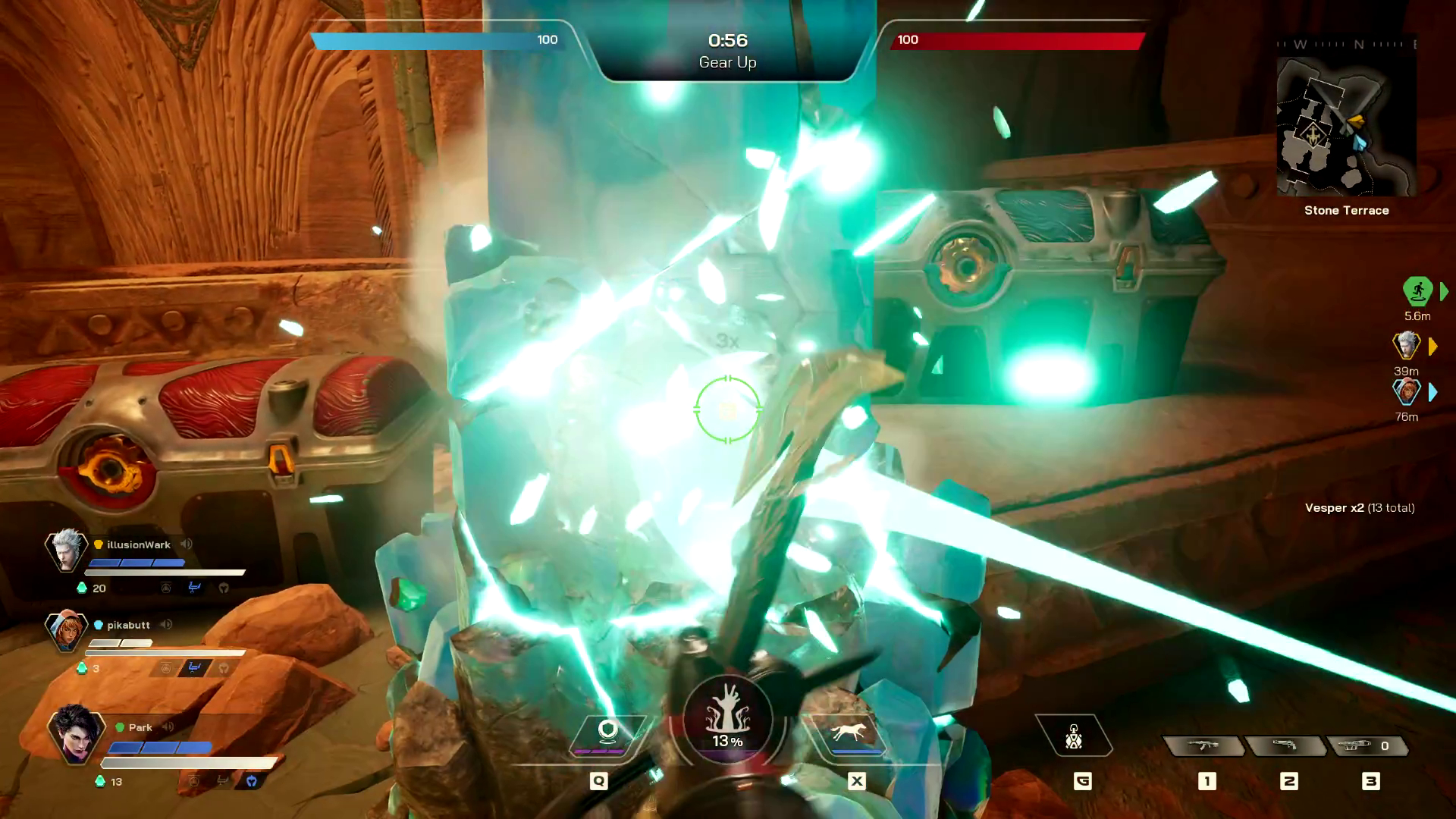
Highguard’s rules are quirky. Matches take place on a large map with six total players—two teams of three. Teams spend the opening minute reinforcing the walls of their home bases before setting off to farm resources, loot better guns, and scrap with enemies. The thrust of this first phase is fighting over possession of the Shieldbreaker, a big glowy sword that lowers the enemy base’s shields when plunged into its gates.
This is the part of Highguard that’s almost always great: Mounting up on bears and horses and outmaneuvering the other team to either slip past their ambush or wipe them long enough to trigger a siege is unequivocally awesome. It’s “reverse capture the flag,” as Wildlight puts it, and it’s so fun that it makes me wonder why this genre ever fell out of love with CTF in the first place. I submit that there never has been, nor ever will there be an objective more thrilling than “carry this object across the map; everybody wants you dead.”
What you get during the Shieldbreaker phase are these concentrated blasts of coordinated teamfights—one of the only parts of battle royales I actually like. It’s a better setup than a traditional battle royale because it ditches the circle that forces groups together through random chance in favor of a centralized objective that brings the action to it.
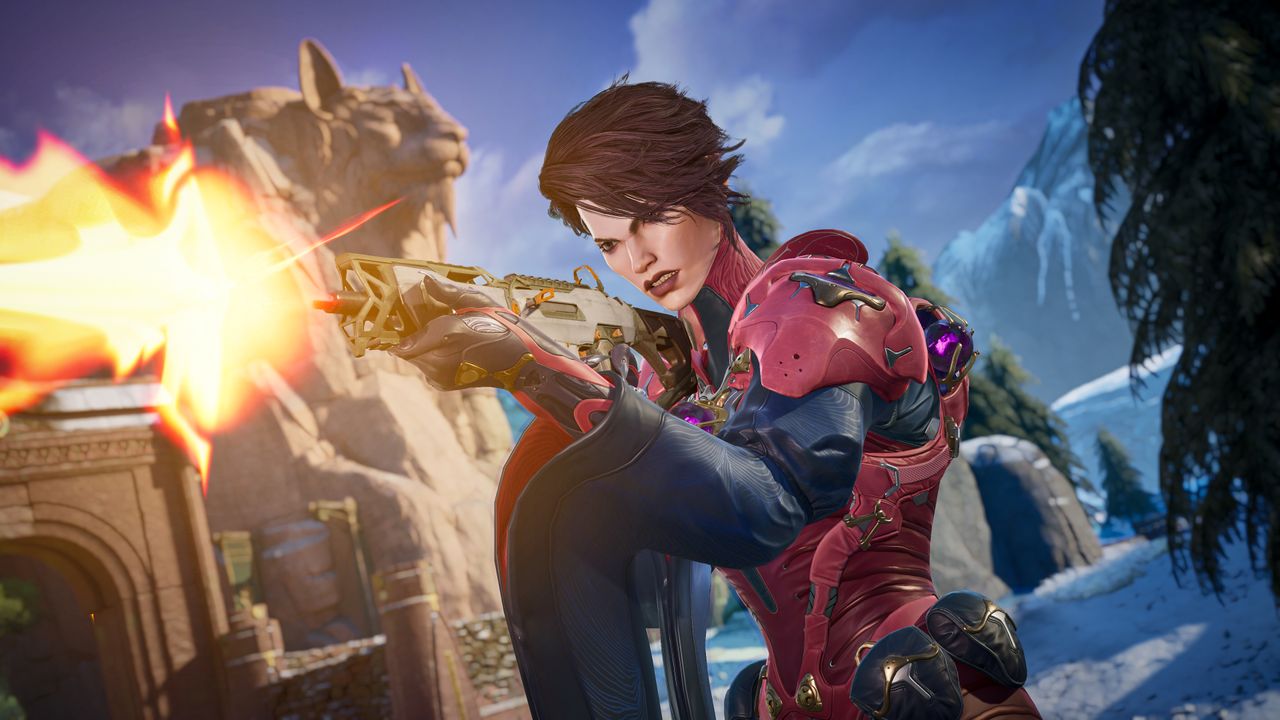
And mounted combat is just super cool. Jumping on and off a mount is effortless and little animation touches—like the rhythmic sway of your riding hand mid-gallop—go a long way to make me believe I’m actually riding a horse despite the deliberate lack of screen shake that’d make it too difficult to shoot.
The siege
When a siege begins, Highguard slows down. Mounts are stowed, defenders take up overwatch positions, and the rules change to a bomb format: get in, set off two bombs on generators, and you win. This is about the point where every match I’ve been in falls apart.
Instead of the attacker/defender dynamic you get in Rainbow Six or Counter-Strike, defenders in Highguard tend to exploit the attacking team’s limited lifepool by rushing them at their gate. Ideally, attackers are meant to punish this aggressive tactic by planting bombs while defenders are dead, but I worry Wildlight has tripped over the same spawnkilling problem its inspirations have struggled with for years.
Because it’s easy for defenders to anticipate exactly where attackers will respawn (either at the top of the siege tower or right in front of it), cheap spawnkills are a constant threat. Unlike Rainbow Six, Highguard attackers can’t just switch the direction of their assault once it’s already begun unless one of your teammates happens to find a “domebreaker” knife that can puncture a second hole in the shield.
You can argue that this sloppy trading of blows is still a valid outcome for sieges—the better team wins the firefights—but in my week of playtime, it resulted in most attack phases ending with a stalemate that draws out every Highguard match into a glacial 30-minute contest.
Because, yes, if a single siege isn’t enough to destroy a team’s base, all parties zap back to their homes to do it all over again. And again, and again. The idea is that each round of “loot, CTF, then siege” builds on the last. Blue armor becomes purple, gold-tier guns with legendary perks enter the loot pool, and a supply drop holding a massive LMG power weapon serves as a secondary objective to fight for before the sword spawns.
The logic is sound, but the same streamlining that makes Highguard digestible in short bursts becomes a thorn in my side. Looting is simply too repetitive and predictable to want to repeat three times. The only secondary gear that really matters is your armor and helmet (both of which you can buy from the death screen), so once you have two guns you like, there’s not much to do but wait around the Shieldbreaker until the other team shows up.
The downtime isn’t that long or anything, but it has afforded me time to ponder fundamental questions of Highguard, such as: Why is there so much looting in a game that clearly dislikes looting? Would this be more fun with more players per team? Why are there multiple sieges per match when one longer siege could be more exciting and succinct?
Base-ic
How Highguard got its strange shape comes into focus when you hear Wildlight talk about building it. They were dead set on coming up with an FPS format that nobody else was doing—a noble goal! They started by trying to turn Rust base raids into a repeatable format. At various points in development, Highguard had 16-player lobbies, four bases with no Shieldbreaker, and softer goals.
As they described it, this messier version of Highguard where larger teams frantically raced around the map demolishing bases sounded pretty fun, but the team said it had major problems. “Matches never ended,” Wildlight told me at a preview event last month, and “we kept wanting to feel like we were winning.” Gradually, they introduced more rules and structure, falling back into a comfort zone established with Apex Legends: three-person squads, hero abilities, a concrete win condition, and loot.
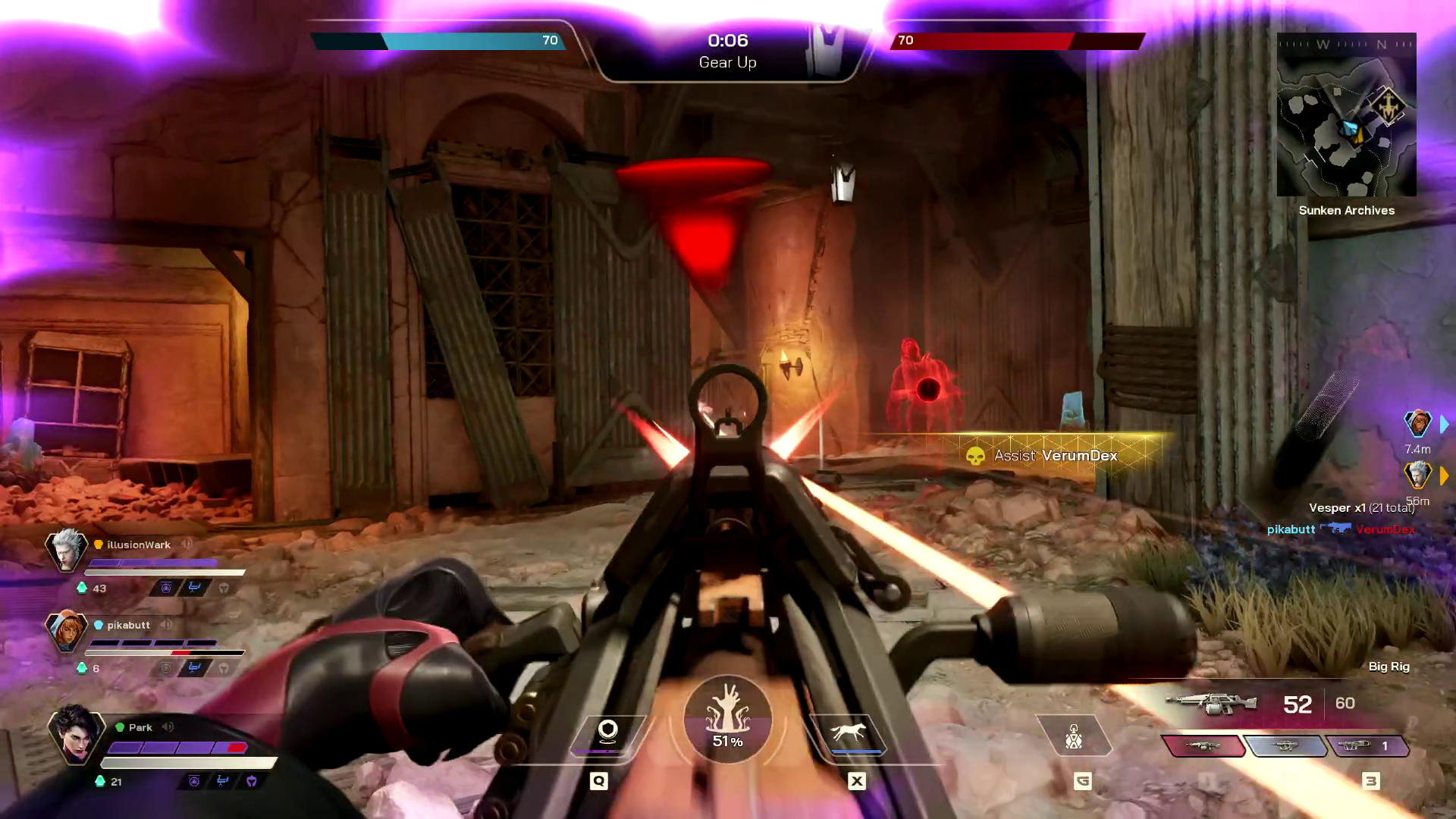
The result is a cool and throwbacky mode chained to systems that feel totally stale at this moment. Take Highguard’s tiered armor, which sucks for the same reasons it sucks in Apex: it prolongs firefights and makes guns feel weaker over time. If I didn’t know beforehand that Highguard was made by Apex vets, I would’ve figured it out when I dumped an entire magazine into a guy’s chest and didn’t kill him. It’s obvious to me that armor only exists to justify the presence of loot, which itself exists to create faux progression based on chance.
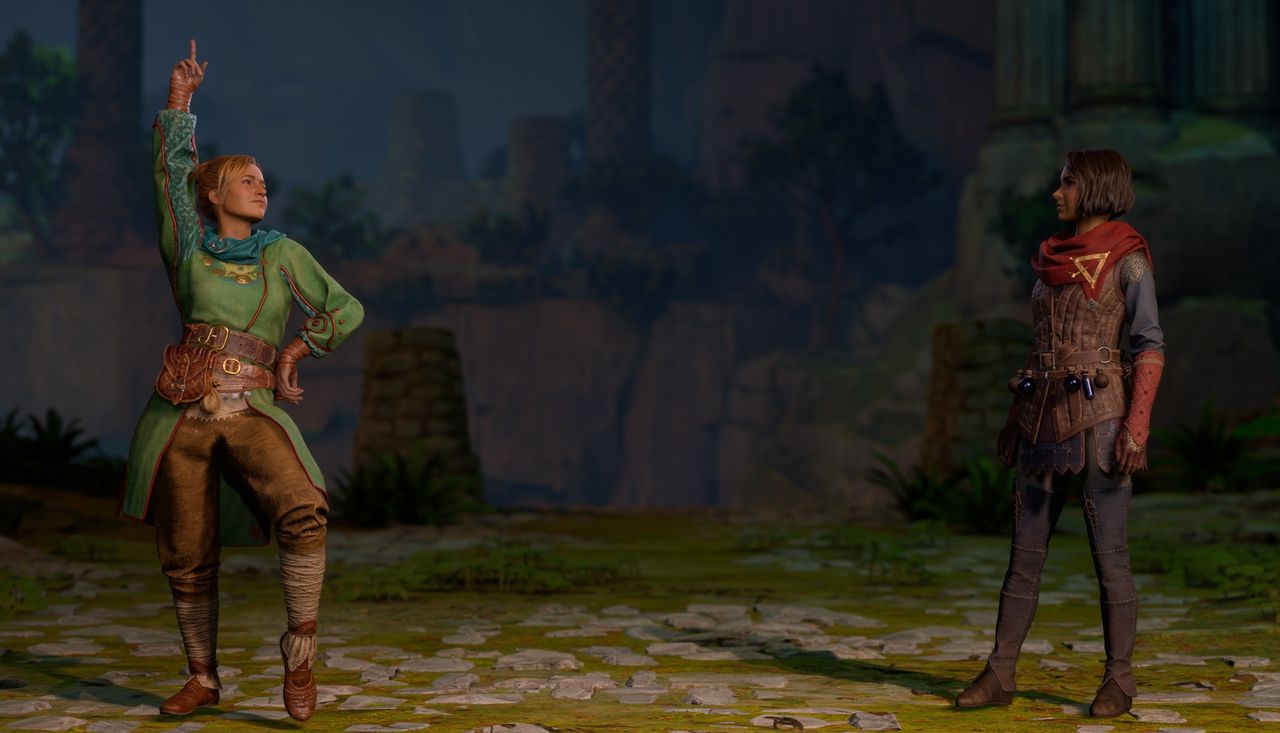
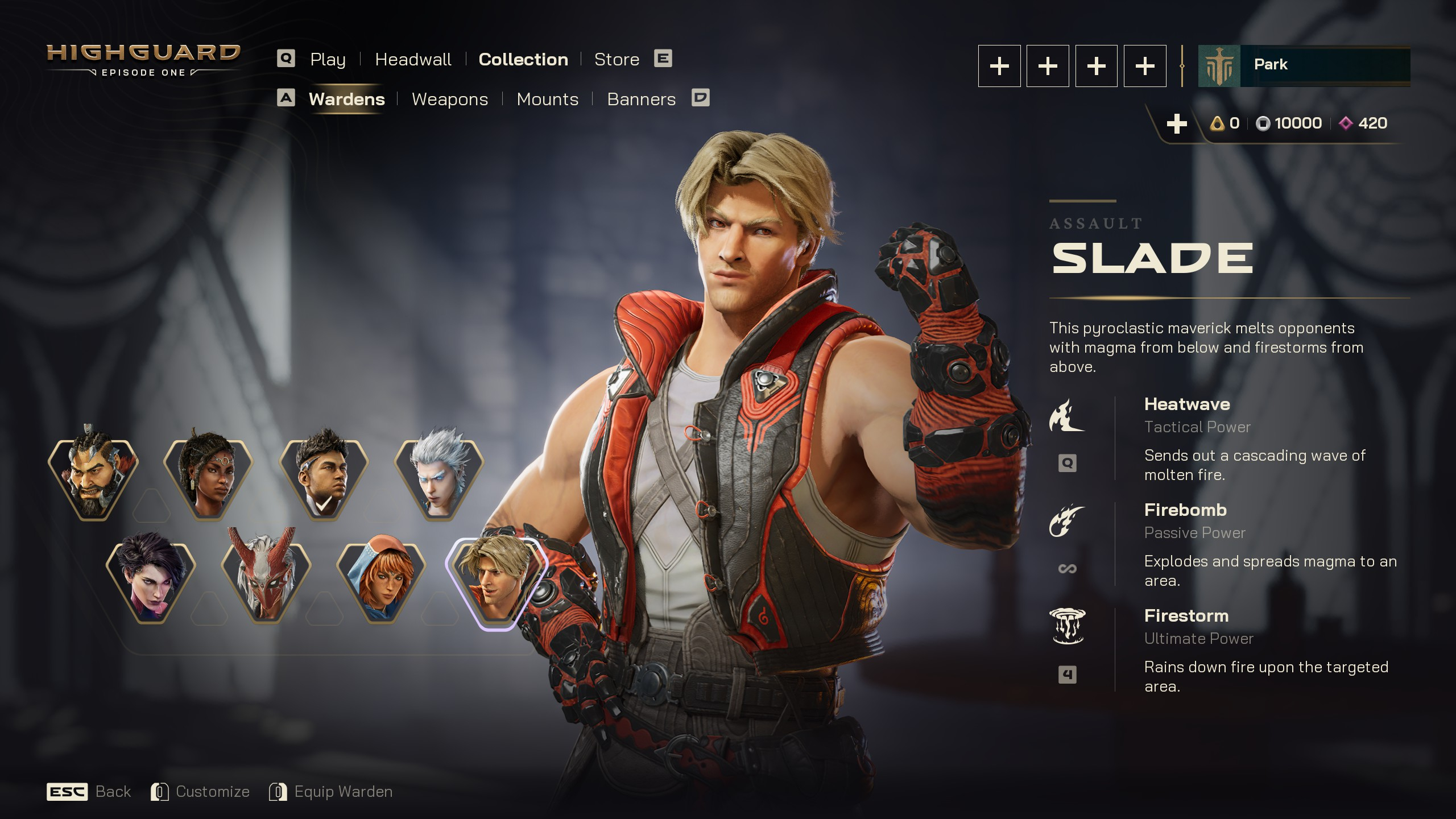
And seriously: guns plus magic? Arcane punk? Bleh. I simply cannot with yet another cast of quirky heroes. Highguard’s characters are well made, but they’re not exactly original, and I thought we all decided years ago that cringey, unmutable one-liners were a cheap way to “world build” in a multiplayer shooter. It’s the overdose of gun-toting magicians who never stop yapping that drove me back into the arms of classic Halo’s two-toned factions.
Take it easy
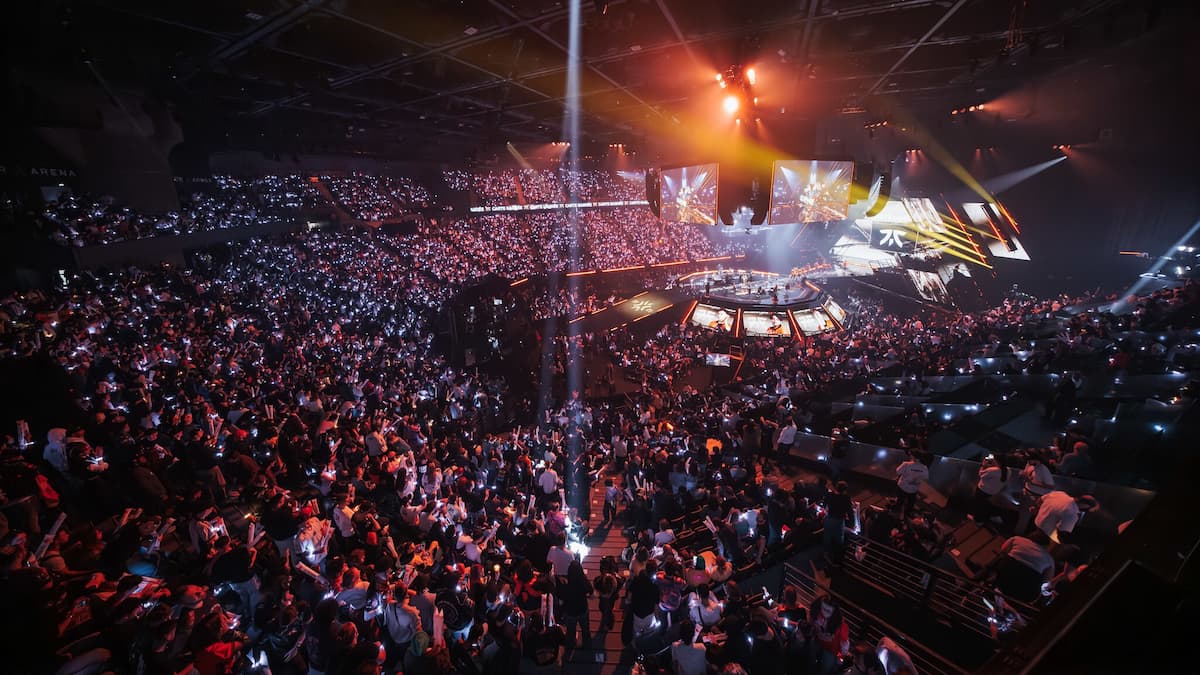
For how much I’d like to approach Highguard like something I can enjoy casually, it very much wants to be the opposite: it wants a meta, it wants counter picking, it wants a ranked scene, and it wants you to get sweaty. It needs to be clean, compact, competitive—esports ready, should the interest arise.
But is that better than Highguard’s initial trajectory? Maybe at the height of my Rainbow Six days, I’d say yes. But I just sunk 75 hours into Battlefield 6, a 32v32 game plucked out of 2013 that confidently says ‘Capture points, or don’t. It doesn’t matter that much.’
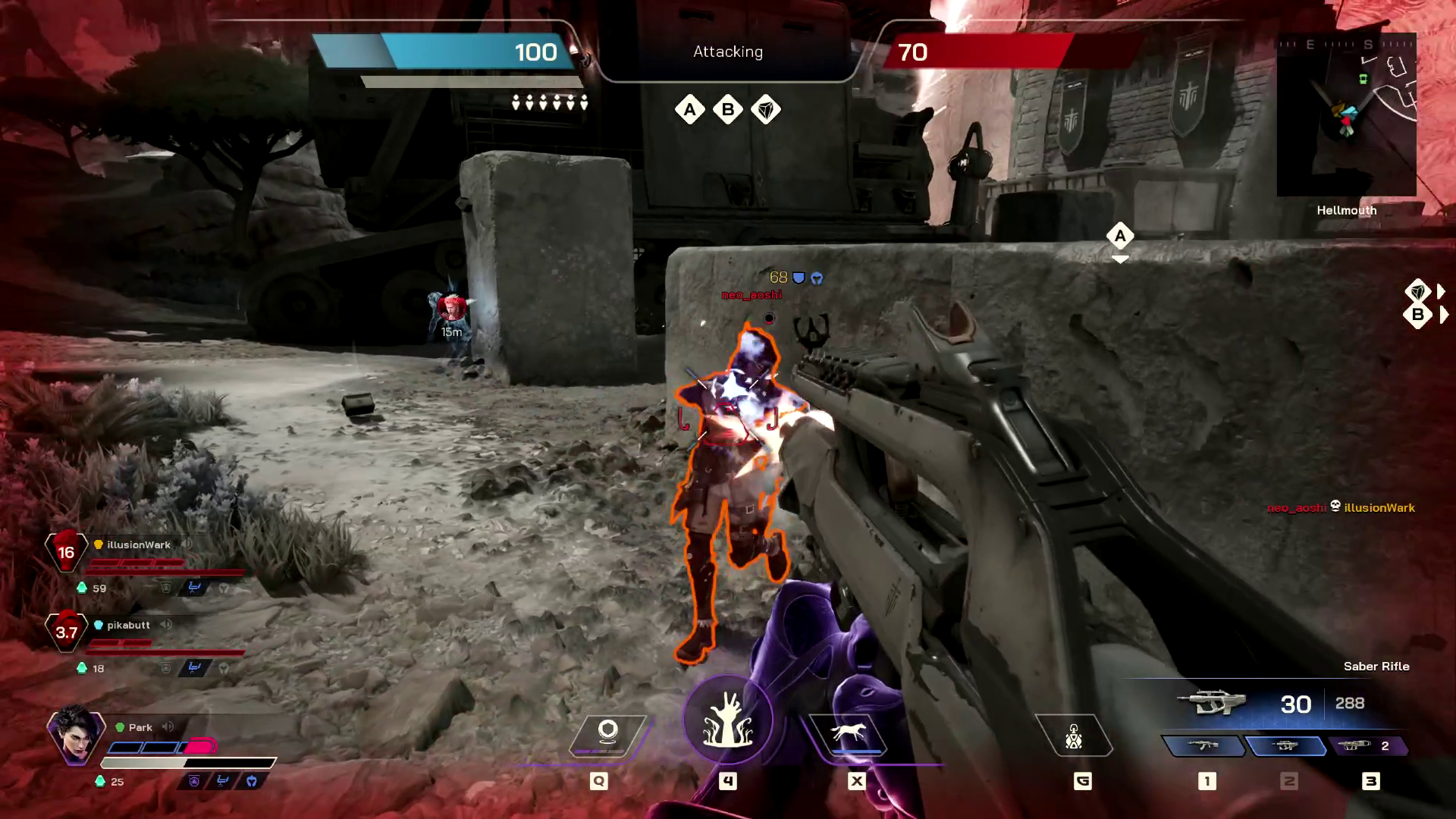
I’m not saying Wildlight should’ve simply made an entirely different kind of FPS, but I do think it could benefit from not taking itself so seriously. We’re shooting AK-47s from bearback, smashing walls with hammers, and playing keep-away with a sword—that’s the fun I wish Highguard leaned into.
Case in point: this past weekend, Wildlight decided to test drive a 5v5 mode after listening to player feedback. It was the most fun I’ve had with Highguard yet, especially during the Shieldbreaker phase. Was it more chaotic? Sure. Are sieges even less tactical than 3v3? No doubt. But at least the stakes felt lower, revives were more common, and downtime was minimal.
That 5v5 mode is now permanent. Wildlight’s willingness to play with the rules to find other kinds of fun gives me some hope for Highguard. More modes have always been part of the plan, and I’ve seen others point out one that’d make me come back: classic Capture the Flag. For now, though, I think Highguard is simply fine.
feedzy_import_tag feedzy_import_tag
About the Author